Abandon Normal Devices curatorial team unpacks the complex, dynamic themes that unpin this year’s festival offering. From lived infrastructure to collective possibility through shared experience we ask: what is remembered, made new, or forgotten when the physical and social infrastructures we inhabit are constantly in flux?
The 2026 edition of AND Festival in Barnsley examines infrastructure as a lived, material and cultural condition. Within it lie unseen networks of commerce, communication, and social relations as well as historical extraction legacies, futures planning, and turbulent social climates that underpin an intangible sense of belonging in the North of England. Organised through a set of spatial and conceptual nodes, including heritage sites, civic institutions, digital infrastructures, and public landscapes, the festival maps onto and intervenes within the systems it seeks to examine.
Infrastructure as Landscape
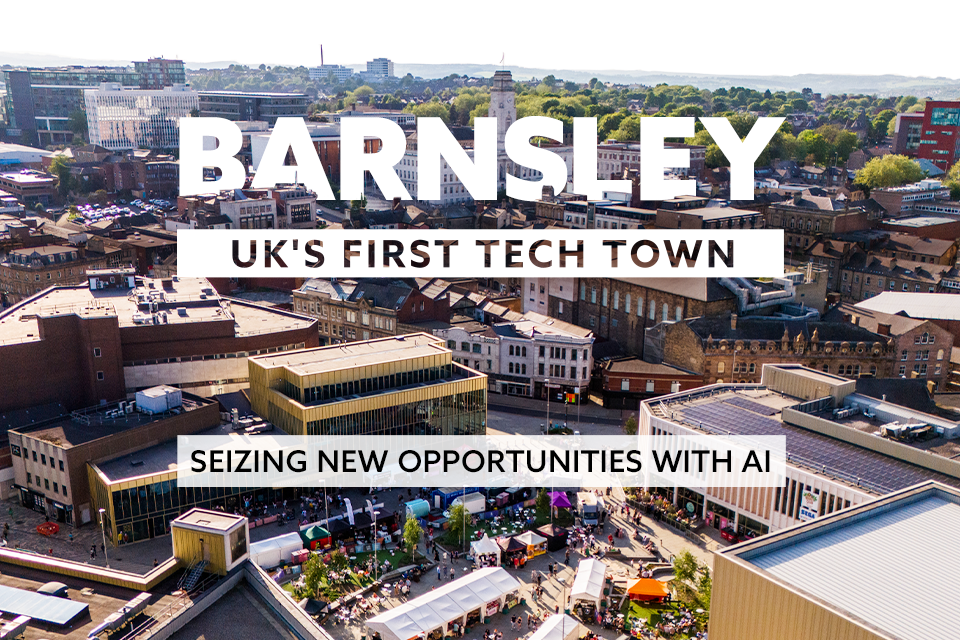
In early 2026, Barnsley was designated the UK’s first government-backed “Tech Town”, a pilot site for embedding artificial intelligence across public services, education, and local economies. Within this context, infrastructure can be understood as an active, informational matrix. As Keller Easterling suggests, infrastructure space operates through active forms such as routines, schedules, and protocols that determine how objects and behaviours are regulated (1). By slightly unfocusing our attention from the visible to the systemic, these infrastructural environments emerge as test-beds within which latent possibilities surface.
Taking Bruno Latour’s actor-network theory (2), which proposes that invisible networks become visible when an actor or link in the network fails, we might ask what moments of breakdown or friction within city infrastructure expose the dependencies, inequalities, and power relations embedded within these newly forming technological infrastructures. With sleek and shiny interfaces, what meta-levels of history and archive become obscured in the smoothing-over process?
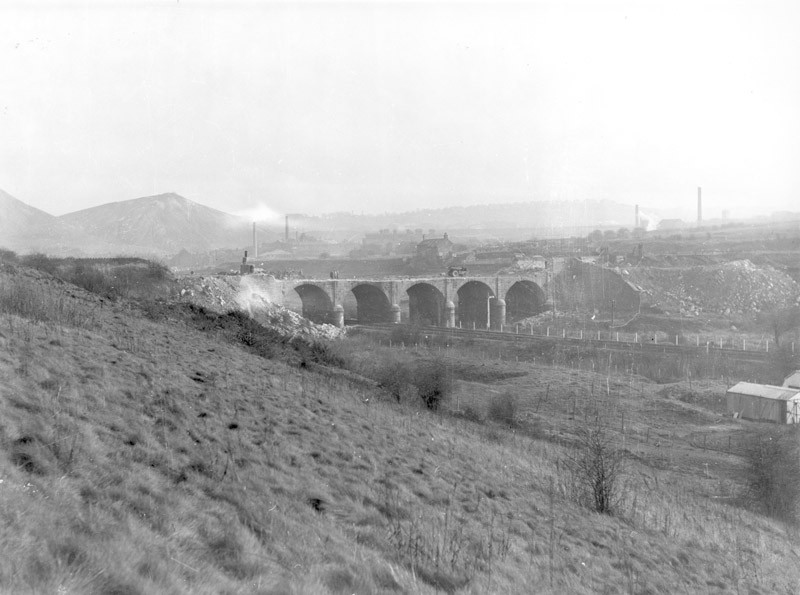
As a historically industrial place, Barnsley carries deep geographical and cultural ties to mineral extraction and processing, shaping the way its landscape is perceived and interacted with as well as the social, economic, and affective lives that continue to unfold within it. By the early 20th century (3), Barnsley sat at the centre of one of the most productive coal mining areas in Britain, with dozens of collieries operating across the borough and tens of thousands of people employed in the industry. In 1900, more than 100,000 miners were employed across the South Yorkshire coalfield, with coal by then Barnsley’s largest industry. It became a place with strong communality, with many of the workers finding kinship within shared working conditions and trade unions. With a mining history spanning decades, “geology becomes a way to investigate materiality of the technological media world”(4). Nowhere is this more tangible than in Barnsley, where the coal-rich “Barnsley Seam” underpinned centuries of extraction, binding the region’s geology to the industrial systems that would later evolve. Extraction of the land in this way leaves an indelible mark on the generational locals, the present occupiers, and future sites that materialise in place of it. In this vein, extraction becomes a cultural tie as well as an industrial marker.
Luddite Legacies and Digital Futures
Now a growing economy for new sites of industry, through digital business hubs designed to support tech-creative industries and a focus on green infrastructure development, Barnsley is a place where industrial innovation returns. Once reliant on the material-heavy industry of mining, industry today (like many other regional UK landscapes) relies on the mostly invisible; concealed data centres, cloud-based platforms, and networked labour paving the way for a new kind of growth but one no less dependent on extractive logics.
However, invisibility does not mean immaterial. These systems are underpinned by vast physical infrastructures, not dissimilar from the collieries and purpose-built train lines above ground, and the ventilation shafts and networks of interconnected mining holes and tunnels below ground. Data centres, fibre networks, housing and commerce developments, and server farms trace similarly dense and consequential paths through the landscape. Where historical mining was energy intensive through human labour, these new technological infrastructures require intensive energy through technology cooling, water consumption and land use, placing significant stress under the guise of immateriality.
Within these histories and imagined futures are communities that have been shaped, divided, and newly formed, and are imbued with memories and stories. AND Festival 2026 seeks to ask what is remembered, made new, or forgotten in the communal space when the underlying frameworks that shape both material and conceptual systems we inhabit are constantly in flux. This shift is not speculative. Barnsley, with its designation as the UK’s first “Tech Town” (5), is now a live testing ground for AI-driven public services, education systems, and local industry, supported by government and backed by major technology companies. Here, the infrastructures of the digital economy are not abstracted or reduced to speculation, but are actively being built and trialled becoming normalised within everyday life.
Technological acceleration is not immaterial, or purely informational, but grounded in the logic of geological processes unfolding across deep time. Every device, network, platform, or AI system depends on extraction, transformation, and displacement. These infrastructures are inseparable from ecological breakdown, exploitative labour conditions, and long-term environmental consequences. Yet they are also increasingly bound to new forms of technofeudal power, in which digital infrastructures become sites of enclosure, ownership, and rent extraction, concentrating control over knowledge, labour, and everyday life in the hands of a small number of platform owners. The cloud, often imagined as weightless and universal, is sustained by data centres, logistics networks, and invisible workers whose labour remains obscured by the frictionless interfaces they support. What remains are the residues of production: discarded metals and plastics, exhausted landscapes, fragmented communities, and persistent histories of extraction. Read through this lens, technology is not a neutral tool but a political and material assemblage that carries the weight of the earth.
Situated within the historic Luddite Triangle (5), Barnsley provides a fitting context for reconsidering the politics of technological change. Rather than representing a simple rejection of machinery, the Luddite movement challenged the social and economic conditions (concentrated wealth, displaced skilled labour, redistributed power) under which new technologies were introduced. Read from this perspective, contemporary digital infrastructures raise similar questions: who owns and controls emerging technologies, who profits from their deployment, and who bears their environmental and social costs? As new forms of platform power and technofeudal ownership reshape the way we move in the world, technology must be understood as a material process of extraction, but most importantly as a contested terrain where workers’ rights, ecology, and hierarchy are renegotiated. It demands that we reckon with the entanglements between human activity, more-than-human life, planetary time, and the political economies that increasingly govern contemporary digital existence.
Alf Hornborg reframes global technology infrastructures as metabolic systems (6) transferring labour, energy, and materials from the periphery to the core, reinforcing the idea that technology remaps and reorganises biophysical resources across deep time. Much like industry before it, these micro or macro systems extract value, leaving behind degradation, displacement, and residues that continue to shape landscapes and communities long after their apparent productivity has ended. But they also open possibilities for innovation, collaboration, and reimagining how societies and ecologies might better interact, offering opportunities to design future technologies that are reliant on being regenerative and equitable.
Memory, Play and Collective Possibility
Putting the emphasis on circularity, reconstruction, restoration, and the relationships between people and place, AND Festival 2026 presents points with which to encounter the in-between, where past, present, and potential futures circulate, and the relationships between humans, landscapes, and infrastructure are reimagined. Across sound, installation, and participatory systems, AND Festival 2026 dwells in the liminal zones of place, where atmosphere replaces imposition, infrastructures reveal the uneven geographies of power, attention and care, and where worlds are continuously re-authored through shared experience.
Jazmin Morris’s Northern Quest: A Road To Hopian (2026) offers play as a tool for exploration. The work is an interactive three-level game inspired by real locations in Barnsley and Doncaster, drawing connections between digital play, social infrastructure, and the lived realities of working-class towns across the UK. Inspired by the artist’s lived experience of growing up and forming her practice in the North of England, the work unfolds across three distinct sites, each shaped around an archetypal gameplay figure: The Creator, The Healer, and The Joker
As participants navigate the rendered environments, familiar spaces are transformed into speculative social worlds where systems of care, education, and collective gathering are reimagined into alternate possibilities: an abandoned building becomes a herbal garden focused on healing; a vandalised bus shelter is transformed into a community library for collective knowledge; and a disused natural environment evolves into a space for uninhibited joy.
Using 3D scans of local areas, photographs, and low-poly digitally rendered environments and assets, the work blurs real-world references with fantasy worlding, constructing immersive spaces that reframe existing infrastructures as sites of potential rather than limitation. Across a modular gameplay installation, participants collectively activate these evolving landscapes, positioning digitally rendered environments as a tool for rehearsing alternative forms of social life and shared possibility.
Proffering filmic simulation as a site for perception, Dian Joy’s Krumville (2026) is a multi-screen film that explores memory, perception, and mediated experience set within a fictional town created from personal recollection and algorithmically derived tropes, mapping how memory is flattened, circulated, and reconfigured through global visual flows.
Rather than a single overarching storyline, the work presents a day-in-the-life of Krumville through repetitions, echoes, and interrelations where characters, motifs, and scenes reappear across five synced chapters. Using social media images and lived experience as blueprints, Krumville explores how networked cognition reshapes digital culture into an emergent narrative-building machine. These uncanny images are then restaged with filmed performances in real locations, forming a recursive loop where memory becomes data, image, and performance.
Presented within a phantom shopping centre space, where dormant escalators stand as remnants of a future that never arrived at the back of Barnsley Civic, Krumville unfolds across five ambiguous environments: a factory grounded in labour-intensive metaphor; a high street populated by synchronised figures and quiet absurdities; a theatre occupied by a lone pacing dog and distant disembodied voices; a diner suspended in a loop of stalled action; and an underpass where isolated characters appear tenuously connected across space. Influenced by cinematic and televisual language, AI image generation, and online visual culture, the work constructs a world that feels both hyper-specific and strangely universal.
Activating an old Ironworks building in nearby Elsecar, MONOM presents Acoustic Memories (2026), an immersive spatial audio installation to explore the acoustic memory of extraction and the hidden infrastructures beneath Barnsley’s industrial landscape. Drawing on archival research, industrial histories, and the evolving ecologies that have emerged in their wake, the work forms a dense sonic composition that moves between hyperreal atmosphere and surreal abstraction.
The installation positions sound as a form of spatial archaeology, addressing the social histories and invisible infrastructures that continue to shape the region. Using the spatial capabilities of MONOM’s 4D sound system, the installation reveals a landscape shaped by larger forces while interweaving the resilience of the ecologies and communities that persist. Blending memory, historical fragments, and abstract sonic experimentation, the work asks how sound can carry traces of labour, collective experience, and industrialisation across generations. In doing so, it reflects on the enduring presence of post/industry and how these forces continue to shape the societies that surround and uphold them.
Metahaven’s Chaos Theory (2021) addresses the instability of meaning in an era shaped by networked technologies, ecological uncertainty, and algorithmic systems, exploring how perception, memory, and identity are mediated through increasingly fragmented flows of information. Avoiding the use of conventional narrative language and the binaries of information technology, Chaos Theory operates as a non-linear tale challenging the divisions between fiction and fact, shared realities and dreams.

Referencing snapshots of public transport upholstery that appear throughout the film, reclaimed bus seating is presented as both a functional material and a metaphorical object, echoing the protagonist’s words: “I see us in things that are not us; in the drawings of the seats on the bus.” The fabric itself, named Vigor, is a globally used standard in public transport interiors, and its inclusion within the installation creates an unexpected connection between the film’s location of Amsterdam and the exhibition context of Barnsley. Mirroring the abstract shapes and graphic patterns that recur throughout the film, this everyday, hidden-in-plain-sight surface is recontextualised as a site of critical enquiry, inviting viewers to look beyond habitual forms of perception.
Clusterduck’s (W)HOLE (2025) explores the hidden infrastructures that organise contemporary life, taking the manhole cover as both a physical threshold and a conceptual point of entry into the largely invisible systems beneath our feet. These ordinary objects conceal dense networks of pipes, fibre-optic cables, utilities, and data infrastructures that sustain urban life but rarely enter public consciousness. By drawing attention to these overlooked surfaces, (W)HOLE invites audiences to consider the material infrastructures that underpin the seemingly immaterial operations of the digital world.
Bringing together sculpture, sound, augmented reality, and 3D modelling, the project creates a layered cartography of digital infrastructure using Benjamin Bratton’s thinking in The Stack: On Software and Sovereignty as an important meta-layer. For Barnsley, (W)HOLE unfolds across six manhole covers located throughout the town centre and nearby Elsecar, each paired with an AR intervention that reveals a different layer of the networked environment: Earth, the geological materials from which technologies are extracted; Cloud, the physical infrastructures of data storage and computation; City, the built environment through which these systems are embedded; Address, the protocols that locate, identify, and route information; Interface, the devices and surfaces through which digital systems are encountered; and User, the human subject whose movements, interactions, and data sustain these networks. Together, these layers expose digital infrastructure as something grounded in place, resources, and everyday experience.

Opening up a site for expanded thought, the seven-hour stream of content within SERVER references the popular communication formats of livestreaming and reaction videos, while drawing on the nostalgic third spaces of community radio, public access television, and late-night talk shows. Within Barnsley, these forms also echo longer histories of local knowledge-sharing, from working men’s clubs and miners’ welfare institutes to community broadcasting, positioning SERVER as a contemporary forum where conversation and ideation unfold across both physical and digital publics. Contributors expand on festival themes including digital infrastructure, energy systems, urban transformation, and geological time, connecting local histories and contemporary conditions in South Yorkshire to wider global questions of technology, ecology, labour and collective futures.
By treating media as something that begins and ends in the earth, AND Festival 2026 shifts attention from technological novelty to material consequence, and the communities that navigate the spaces between. At a moment when Barnsley is framed as a national model for AI-led transformation, the festival resists singular narratives of progress, instead re-sensing emerging conversations, frictions, and possible futures within and around these systems.
Explore the AND Festival programme now.
This essay was written and researched by AND’s curatorial and production team.
(1) Easterling, K. (2014). Extrastatecraft: The Power of Infrastructure Space. [online] Available here.
(2) Latour, B. (2005) Reassembling the social: an introduction to actor-network-theory. Oxford: Oxford University Press.
(3) Miners” strike research guide, Sheffield City Council. (n.d.). [online] www.sheffield.gov.uk. Available here. [Accessed Aug. 2026].
(4) Jussi Parikka (2015). A Geology of Media. U of Minnesota Press.
(5) BBC News – “UK’s first Tech Town to become AI ‘trailblazer’” (3 February 2026)
(6) The Luddite Triangle refers to the region spanning parts of Yorkshire, Lancashire, and Nottinghamshire, including Barnsley, where Luddite uprisings took place between 1811 and 1813. Contemporary scholarship increasingly understands Luddism not as opposition to technology itself, but as resistance to the ways technological innovation was deployed to concentrate wealth, undermine workers’ rights, and reorganise social relations. Thanks to Hannah Cobb for bringing this to my awareness.
(7) Hornborg, A. (2025). Exploring the materiality of Anthropocene ‘socionatures’: globalised technological metabolism as intraspecific parasitism. Law, Innovation and Technology, pp.1–18. doi
Image credits: Atomfall, Rebellion Developments; Barnsley Museums; Barnsley Council; Chaos Theory by Metahaven; (W)HOLE by Clusterduck.