Meet the Unsecuring Infrastructures cohort
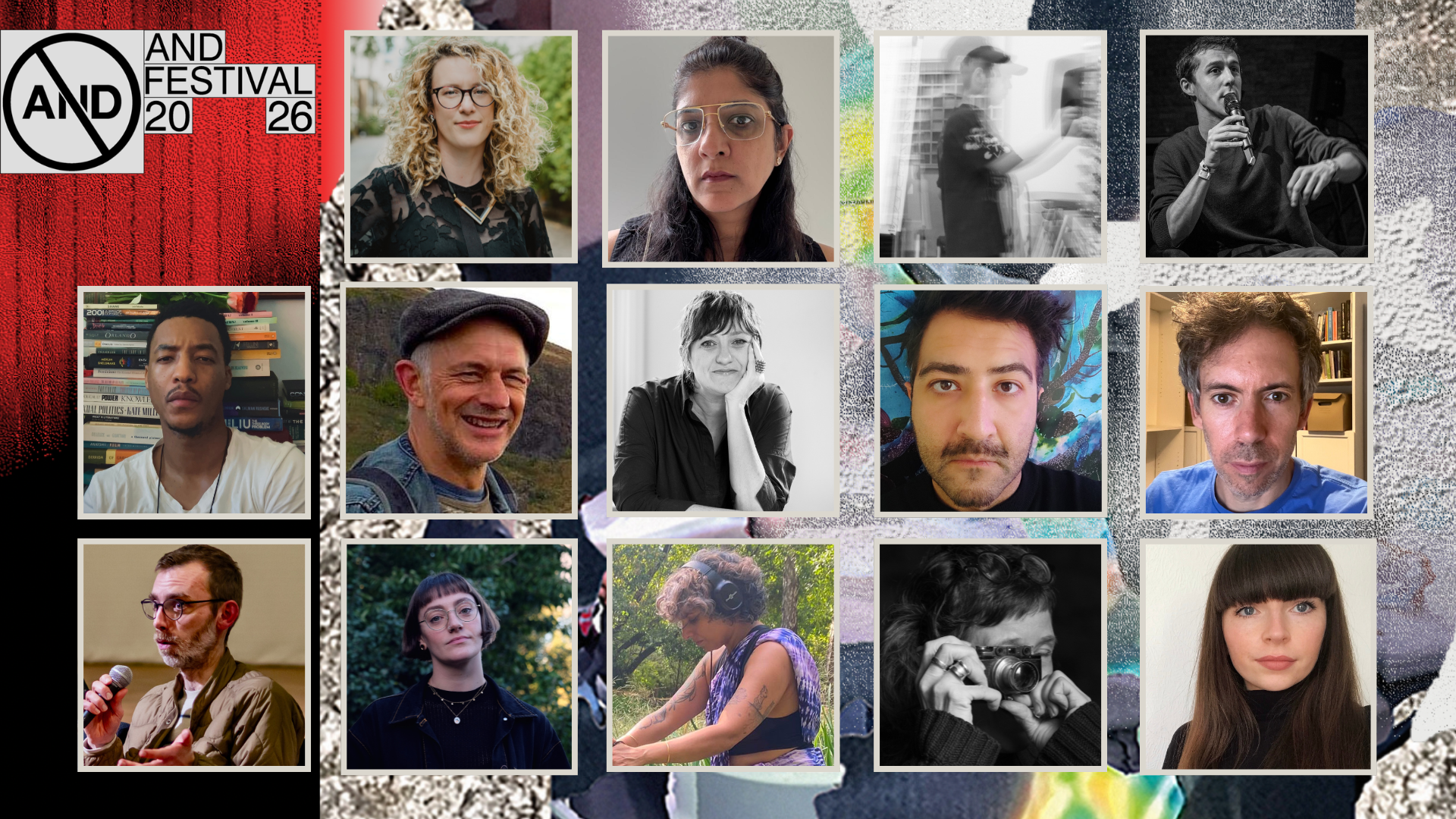
Fri 18 Sep 2026Today we announce the 14 participants taking part in Unsecuring Infrastructures as part of AND Festival 2026.
Across the festival weekend, invited experts and selected participants will experience the festival together before taking part in structured interdisciplinary discussions.
In Disordered Attention, Claire Bishop argues that politically timed artistic interventions can perform “conjunctural analysis”, condensing the contradictions of their historical moment into highly abbreviated form. As a temporary, site-responsive festival arriving at the moment Barnsley is being recast as the UK’s first Tech Town, AND has considerable interventionary potential.
Dr Nathan Jones’ Distributed Critique methodology gathers the different forms of expertise required to unpack this potential. They’ll use immersive and site-specific art experiences to combine the resulting insights into a multifaceted account of our present situation and where it may be heading.
Invited guests Daniel Rourke, Martin Zeilinger, Nigel Clark, Oonagh Murphy and Rose Butler will gather with workshop leads Nathan Jones, Mark Wright and selected participants from the open call: Áine McKenny, Andy Weir, Archana Prasad, Tamar Millen, Jake Parry, Jazmine Linklater, Kaajal Modi, Kwasu Tembo and Wassim Zuhair Alsindi over the festival weekend.
The Lab is a curated cohort of experts from wide ranging research subjects including: emerging technologies, digital culture, posthuman theory, art writing, loss, deep time imaginaries, experimental composition, food culture and conflict.
The breadth of expertise and research interests in the group brings a deep richness and diverse perspective to the Lab itself which will result in a post-festival publication: part festival reflection, part research report exploring AI, identity and infrastructure in the UK’s first Tech Town.
Meet the Unsecuring Infrastructures participants
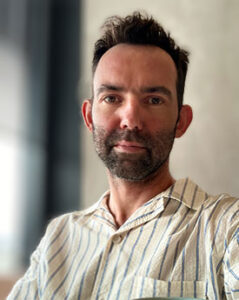
Nathan Jones
Dr Nathan Jones is Senior Lecturer in Fine Art Digital Media at Lancaster University. His research examines how emerging technologies reshape language, culture and collective life. He is the author of Glitch Poetics, co-editor of BiblioTech: ReReading the Post-digital Library and co-founder of Torque Editions. His current work through Unsecurities Lab at Security Lancaster develops arts-led methods for investigating agentic AI, technological uncertainty and the cultural narratives embedded in computational systems.
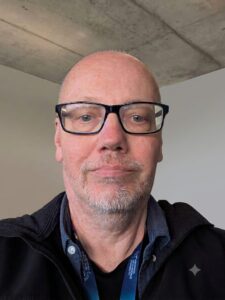
Mark Wright
Dr Mark Wright is co-director of X-lab, which is an experimental, cross-disciplinary research lab within the Institute of Art and Technology at Liverpool School of Art and Design. Previously he held a joint appointment between FACT (The Foundation for Art and Creative Technology) one of Europe’s leading centres for new media, where he was Director of FACTLab. He has also been a senior research fellow between Edinburgh College of Art and the School of Informatics at the University of Edinburgh. He holds a Phd from the University of Cambridge.

Áine McKenny
Dr Áine McKenny is a researcher, writer and curator specialising in how museums, exhibitions and archives shape — and are shaped by — war, conflict and peace. Her work sits at the intersection of history, museology and cultural memory studies, and explores how exhibitions mediate difficult and contested histories through material and visual culture. She is a co-founder of the Memory, Narrative & Histories Research Collective, whose members investigate the complex relationships between present and past, including marginalised histories, conflict aftermath and cultural histories.
She has over a decade of experience working across museums, galleries and archives in a variety of roles and departments. She currently works at The Peace Museum, where she develops new ways to create access and engagement with this important resource and the histories it holds.
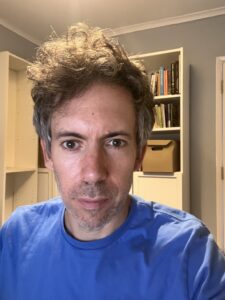
Andy Weir
Andy Weir is an artist, writer and Senior Lecturer in Fine Art at Chelsea College of Art. His research explores relations of art to deep times and futures of the underground, drawing on materialist philosophies, mythic fictions and planetary politics. He is currently on a UAL research sabbatical completing a monograph on art and nuclear waste for publication with Intellect . This draws on practice research to propose deep time imaginaries through various lenses including colonial histories, lived relations to toxicity, leaky spaces, holey times, buried voices, future relics and scale-shifting agencies.
https://www.andyweirart.com // https://researchers.arts.ac.uk/2330-andy-weir
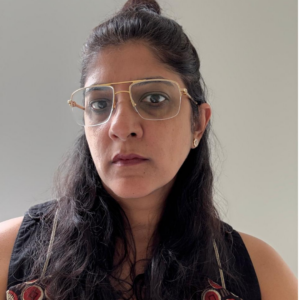
Archana Prasad
Archana Prasad, Founder & CCO is an artist-technologist, researcher, and founder of Gooey.AI. She is a PhD researcher at the Royal College of Art, where her practice-led research focuses on participatory AI design, cultural archives, and inclusive technological futures. Her work sits at the intersection of art, community engagement, and institution-building, with a strong emphasis on community-led and ethically grounded AI systems.
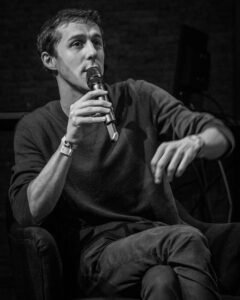
Daniel Rourke
Dr. Daniel Rourke is a writer and artist, based at Goldsmiths, University of London, where he researches and teaches at the intersection of critical posthumanism and media theory. His work often mobilises speculative figures, fictional scenarios and collaborative methods to unsettle the all-too-human entanglements between technology, matter and futurity. He is currently working on a writing project exploring large language models, aphantasia, and aphids.
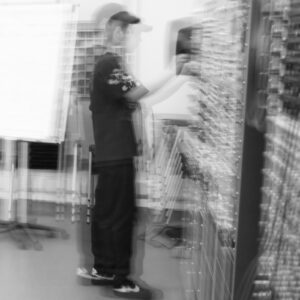
Jake Parry
Jake Parry is a composer and researcher from South Yorkshire and a PhD candidate at De Montfort University, where he is a member of the Music, Technology and Innovation Research Group. His research examines immersion as a materially and historically situated condition through theoretical enquiry and practical production. Working across media archaeology, field recording and experimental composition, his research investigates how technical systems organise the limits and possibilities of artistic production, with attention to the standardisation of technologies and the reification of experimental practices. This approach has been applied to an interrogation of the systematic features of gambling media that produce immersive experiences, culminating in the analysis and sonification of slot machine games as a creative and pedagogical resource. This work, including the project Slotmail, was recently presented at IRCAM in Paris.
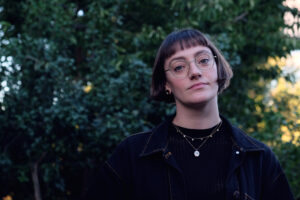
Jazmine Linklater
Jazmine Linklater is a poet and writer based in Manchester where she is a regional editor for the online art writing platform Corridor8. She is currently undertaking practice-based research in art writing and ekphrastic encounters at Sheffield University. Her most recent poetry pamphlet is Snagged on red thread (Monitor Books, 2025), and her first full collection, Your Accurate Depiction, is forthcoming in 2027 from Fitzcarraldo Editions.
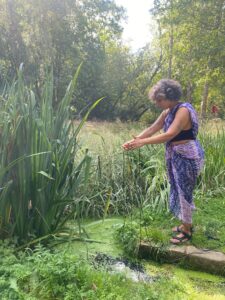
Kaajal Modi
A multidisciplinary artist-researcher mediating material engagements with food, land and water to explore the politics of how humans relate to the world through our bodies, senses and imaginations. Modi is a lecturer in Digital Media Practice at the University of Leeds, a visiting fellow at the Center for the Social Study of Microbes at the University of Helsinki, and an affiliated researcher at the Heritage for Global Challenges research centre at the University of York. They are also part of the Sijelo Collective, a collective of migrant womxn artists, creatives and activists dedicated to addressing the intertwined challenges of displacement, racial justice, and climate justice.
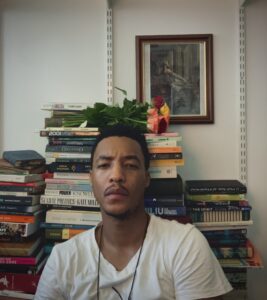
Kwasu Tembo
Kwasu David Tembo is a full-time lecturer at Lancaster University, teaching across English Literature and Film. His research interests include – but are not limited to – comics studies, literary theory and criticism, philosophy, particularly the so-called “prophets of extremity” – Nietzsche, Heidegger, Foucault, and Derrida. His current research activities centre around film criticism and theory, psychoanalysis, philosophy, and sexuality. His international output is featured in peer reviewed periodicals and anthologies including those by Lexington and Palgrave.
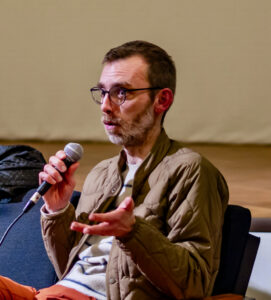
Martin Zeilinger
Martin is a researcher, curator, and organiser interested in critical artistic perspectives on emerging technologies. He is currently based between Ghent/BE, where he is a Senior Research Fellow on the Posthuman Music project at Orpheus Institute, and Dundee/UK, where he is Reader in Computational Arts & Technology at Abertay University. Martin is author of Tactical Entanglements (meson press 2021) and many other writings on art & technology, co-organiser of the Wet Tech series of improvised experimental music events (in Dundee), and co-founder of the Critical Cycling Studies Assemblage – marjz.net
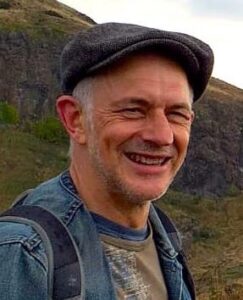
Nigel Clark
Nigel Clark teaches human geography at Lancaster University, where he is Chair of Social Sustainability at the Environment Centre. His research looks at how our planet transforms itself over time, and how different social groups engage with this variability – in practical and creative ways. He is the author of Inhuman Nature: Sociable Life on a Dynamic Planet (2011) and co-author with Bronislaw Szerszynski of Planetary Social Thought: The Anthropocene Challenge to the Social Sciences (2021). Nigel is currently researching planetary repair, explosive violence, and the long history of human engagement with fire.
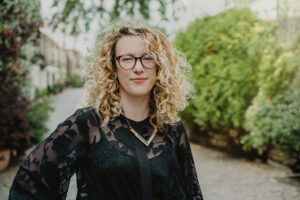
Oonagh Murphy
Oonagh Murphy is Director of the Responsible AI Cultural Leaders Academy at Arts Council England, Senior Lecturer in Digital Culture at Goldsmiths, and a BRAID Research Fellow. With a background spanning academia, policy, and research leadership, her work focuses on how organisations and societies can navigate the opportunities and challenges of artificial intelligence responsibly. She has worked extensively at the intersection of technology, culture, governance, and public policy, bringing together leaders from across sectors to address the societal impacts of emerging technologies. Her research and leadership explore responsible AI, public value, and the capabilities needed for effective decision-making in the cultural sector at a time of rapid technological change.

Rose Butler
Rose Butler is an artist, researcher and senior lecturer of Fine Art based in Sheffield, UK. She uses adapted technology, software and new media, alongside early cameras and analogue processes to make interactive installations, single and multi-screen videos or large-scale photographs. She works with the material qualities of image-making and plays with the edges, uncertainties and failures of technologies. Her work examines borders, definition, resolution, information and imagery. It crosses paths with the politics of big tech and surveillance and considers hard to access, contested or sensitive spaces and communities. Projects are often socially engaged and result in artworks, exhibitions, artists talks, performances, presentations or publications. Rose is particularly interested in collaboration and interdisciplinary working and has presented at many conferences in the UK and abroad foregrounding the potential of arts research methods across disciplinary fields.
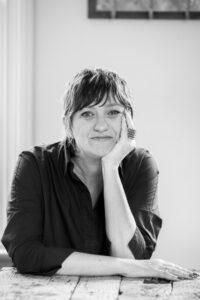
Tamar Millen
Tamar Millen is a design researcher, producer, and cultural strategist with over 30 years’ experience working across socially engaged arts, digital media, and cultural policy. She has co-founded a pioneering media lab, led national partnership work with Arts Council England, produced large-scale exhibitions and city-wide placemaking programmes in South Yorkshire.
A PhD candidate at the University of Sussex, Tamar’s research examines design conditions for ordinary hope and belonging in contexts of ambiguous loss. Focusing on socially engaged artist-led initiatives in post-industrial communities of South Yorkshire her work investigates how creative practice enables communities to build resilience against a background of uncertainty and loss, cultivating hopeful environments.
Tamar specialises in bridging research and practice, working between roles as insider and advocate. She brings a strong commitment to equity, collaboration and amplifying community voice, translating complex challenges into creative opportunities that foster care and connection.
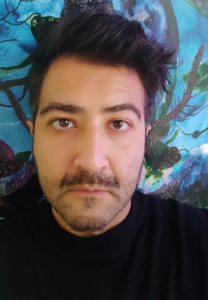
Wassim Zuhair Alsindi
Wassim operates at the intersection of intersections, chronicling visions, designs, and externalities of contemporary technologies across context and episteme. Wassim holds a Ph.D. in ultrafast physics, co-founded MIT’s Cryptoeconomic Systems journal, and has performed, lectured, and exhibited in over 30 countries.
Unsecuring Infrastructures for AND Festival 2026 is developed by Lancaster University through Unsecurities Lab, an interdisciplinary research initiative exploring how contemporary art can function as research infrastructure. It was initiated by Dr Nathan Jones at Security Lancaster – a leading hub for transformative security research and engagement.
This edition is presented in partnership with Liverpool John Moores University’s Institute of Art and Technology (IAT) and Experimental Technologies Lab (ETL), led by Dr Mark Wright.